Starting or growing a business in Nigeria can be a highly rewarding experience, but the economic realities of the country can make scaling up a massive challenge. To run a successful business, you need capital or at least some financial backing to get things off the ground. Fortunately, you don’t have to take on heavy loans or dilute your equity.
In this article, we highlight the top 11 funding programmes offering free grants, mentorship, and equity-free capital to help Nigerian entrepreneurs turn their business dreams into reality. We'll cover what each programme offers, who can apply, and where to find more information.
1. Tony Elumelu Foundation (TEF) Entrepreneurship Programme
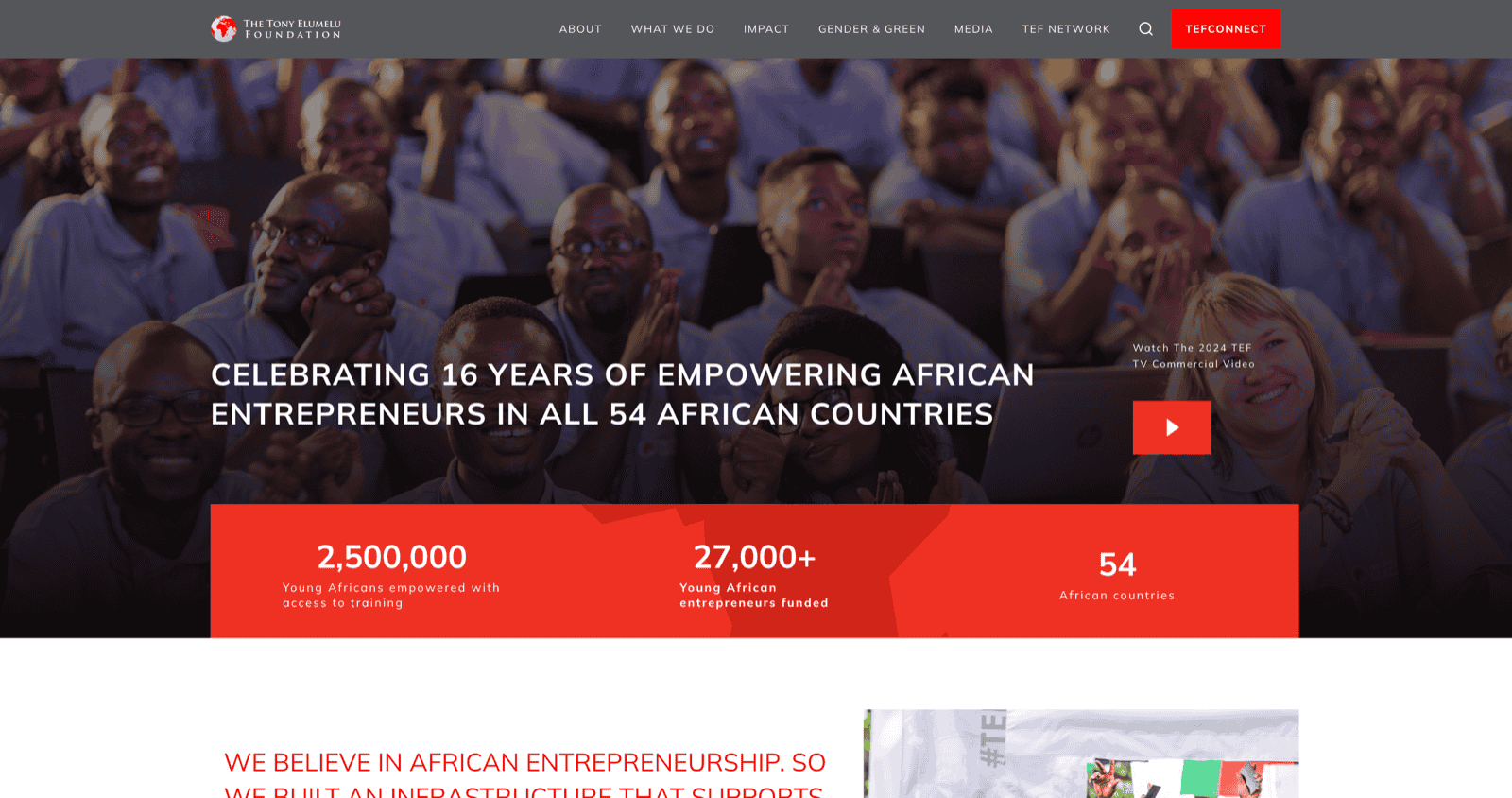
The Tony Elumelu Foundation (TEF) Entrepreneurship Programme is one of Africa's most recognised entrepreneurship support initiatives. It was established to empower African entrepreneurs with the resources, skills, and networks they need to build sustainable businesses.
Through the programme, selected entrepreneurs receive US$5,000 in non-refundable seed capital, alongside business training, mentorship, and access to a network of entrepreneurs across Africa.
The programme is open to entrepreneurs from all 54 African countries, including Nigeria, and supports businesses across multiple sectors.
What you should know:
- Funding type: Non-refundable seed capital.
- Funding amount: US$5,000.
- Target audience: African entrepreneurs with early-stage businesses.
- Additional benefits: Business management training, mentorship, and access to a pan-African business network.
How to apply: Visit the Tony Elumelu Foundation website and follow the application announcements through TEFConnect.
2. Investment in Digital and Creative Enterprises (iDICE)
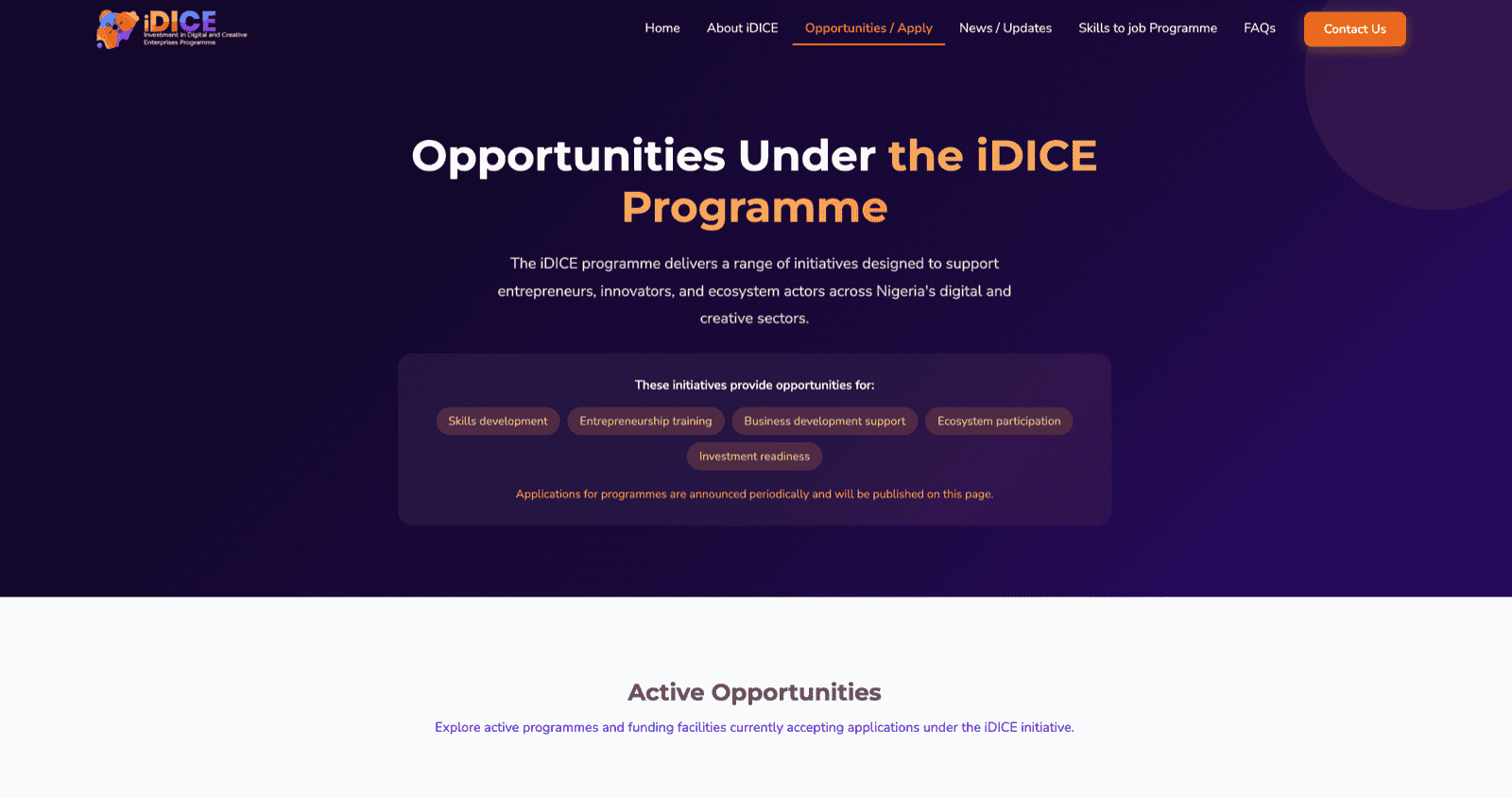
The iDICE programme is a Federal Government of Nigeria initiative designed to support the country's technology and creative sectors.
The programme aims to address funding and capacity-building gaps faced by startups and businesses in areas such as software, fintech, artificial intelligence, film, music, gaming, and other creative industries.
One opportunity under iDICE is the Startup Bridge Founders Lab, which provides entrepreneurial training, mentorship, and the opportunity for selected participants to qualify for non-equity grant funding.
The programme also has debt and equity financing initiatives, so it's important to distinguish grant opportunities from repayable or investment-based funding.
What you should know:
- Funding type: Non-equity grants through selected initiatives, alongside debt and equity financing.
- Opportunites under the iDICE Programme: BOI–iDICE Debt Fund, IsDB–iDICE Debt Fund, Startup Bridge Founders Lab.
- Target audience: Digital startups, creative businesses, and young innovators.
- Additional benefits: Training, mentorship, business development, and ecosystem support.
How to apply: Visit the iDICE opportunities page to explore active funding and programme opportunities.
3. Small and Medium Enterprises Development Agency of Nigeria (SMEDAN)
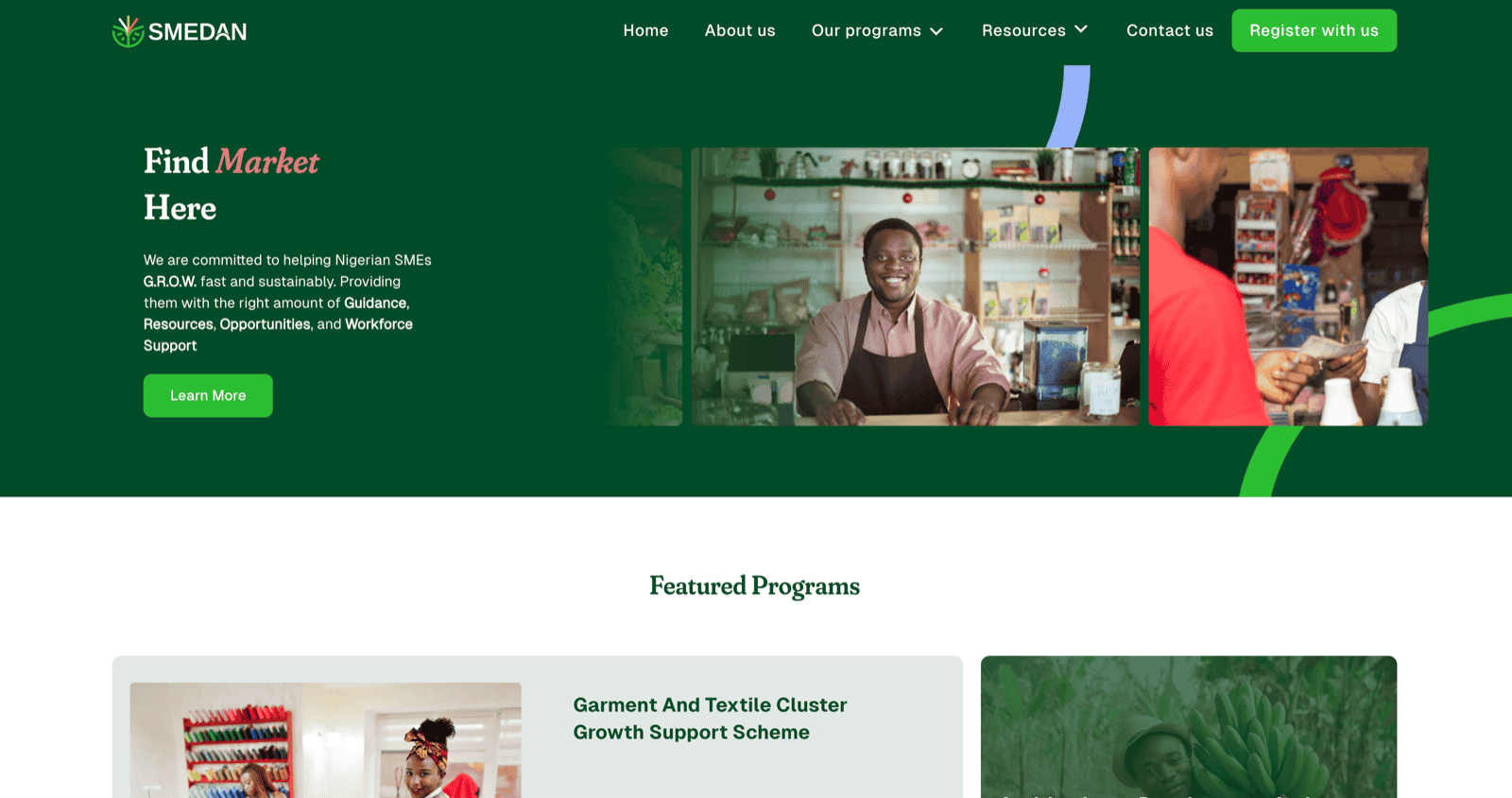
SMEDAN is a federal government agency established to promote the growth and development of micro, small, and medium enterprises in Nigeria.
The agency runs targeted intervention initiatives focused on access to finance, capacity building, digital skills, women empowerment, and cluster development.
Key SMEDAN Programmes to Explore
-
Financial & Micro-Enterprise Grants:
- Conditional Grant Scheme for Micro Enterprises (CGS): Provides micro-enterprises with a ₦50,000 grant on the condition that they employ at least one additional person, boosting capacity and job creation.
- Accelerator Programme: Designed to scale promising MSMEs to the next stage of growth.
-
Women & Youth Empowerment Initiatives:
- GROWHer & WISE-P (Women In Self-employment Programme): Focused on fostering entrepreneurship, financial inclusion, and growth for female founders.
- AWAKE (Advancement for Women in Agriculture, Agro-allied and Cottage Enterprises):
-
Sector & Skill-Specific Training:
- National Business Skills Development Initiative (NBSDI): Provides hands-on technical skills, business management training, and starter packs.
- Capacity Enhancement Initiatives for Auto-mechanics Based MSMEs (CEIAM): Modernizes automotive repair services through technical upskilling and equipment support.
- Agri-business Development and Empowerment Programme (ADEP): Strengthens value chains and commercial viability for agribusinesses.
-
Market Access, Digitalization & Enterprise Support:
- SMEDAN Select Programme (SSP) & PAMES (Products and Marketing Enhancement Scheme): Helps domestic MSMEs improve product packaging, standards, and visibility for local and export markets.
- MSMEs Digital Academy (MDA): Offers digital tools, e-commerce, and literacy training for business digitalization.
What you should know:
- Funding type: Conditional grants, subsidized equipment/starter packs, capacity development, and enterprise support.
- Target audience: Nano, micro, small, and medium enterprises across various sectors (agriculture, fashion, tech, mechanics, manufacturing).
- Additional benefits: Formal certification, market linkages, access to machinery, and business management training.
How to apply: Visit the SMEDAN programmes page to explore active initiatives and official call-for-application announcements.
4. Young Africa Innovates (YAI)
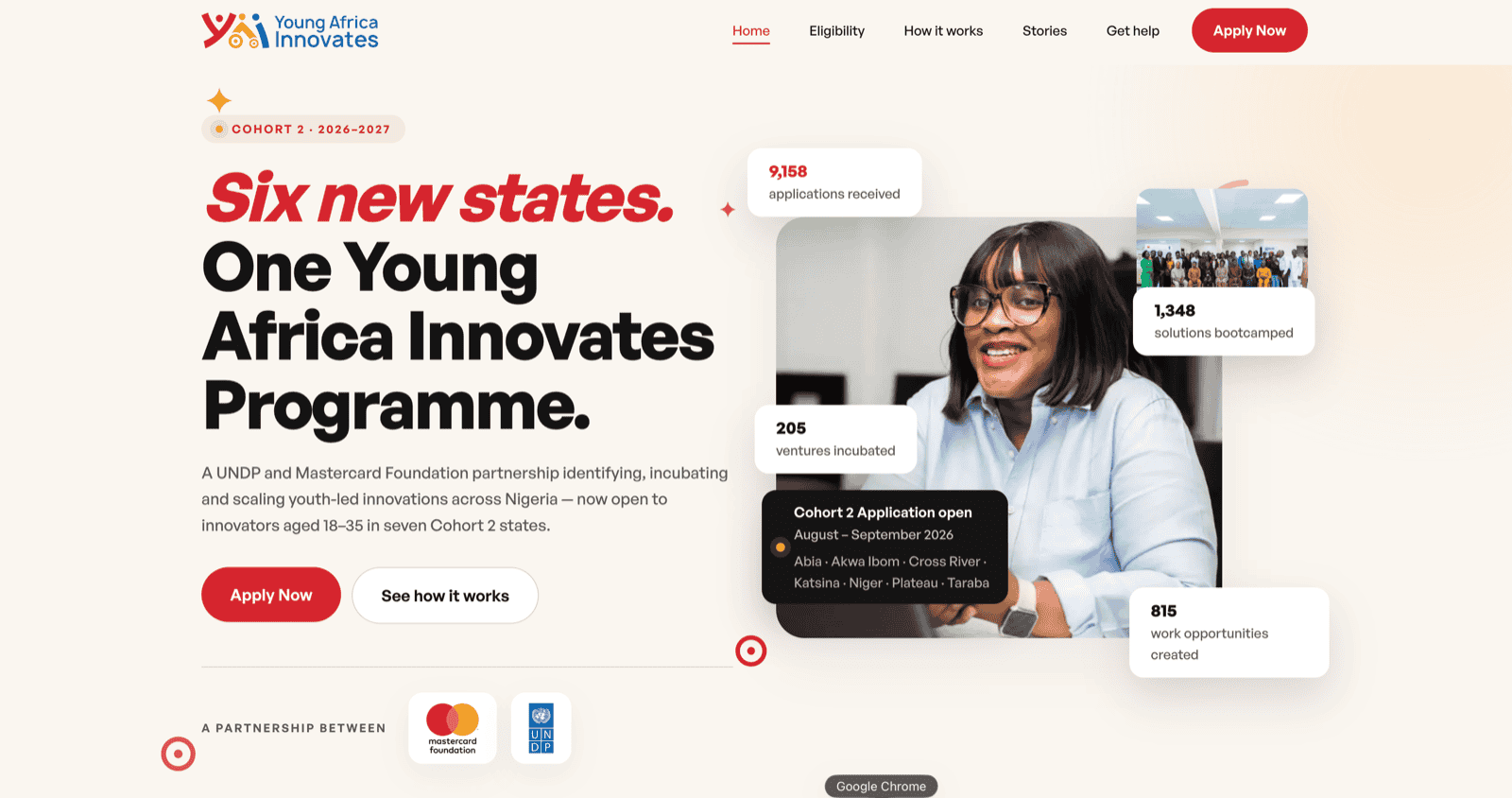
Young Africa Innovates is a youth innovation programme supported by the United Nations Development Programme (UNDP) and the Mastercard Foundation.
The initiative identifies, incubates, and supports young Nigerians developing solutions to social and economic challenges in their communities.
Rather than focusing exclusively on traditional startups, the programme also targets innovative ideas with the potential to become sustainable, scalable businesses.
Participants may receive training, mentorship, incubation support, and financial support through grants as they progress through the programme.
What you should know:
- Funding type: Grant funding for selected innovators, alongside incubation support.
- Target audience: Innovators aged 18–35.
- Eligibility: The 2026 Cohort 2 call is limited to residents of Abia, Akwa Ibom, Cross River, Katsina, Niger, Plateau, and Taraba states.
- Additional benefits: Mentorship, bootcamps, incubation, and market access.
The Cohort 2 application window runs from August to September 2026. Check the official website for the current deadline and eligibility requirements.
How to apply: Visit the Young Africa Innovates website.
5. NITDA Tech Revolution Africa
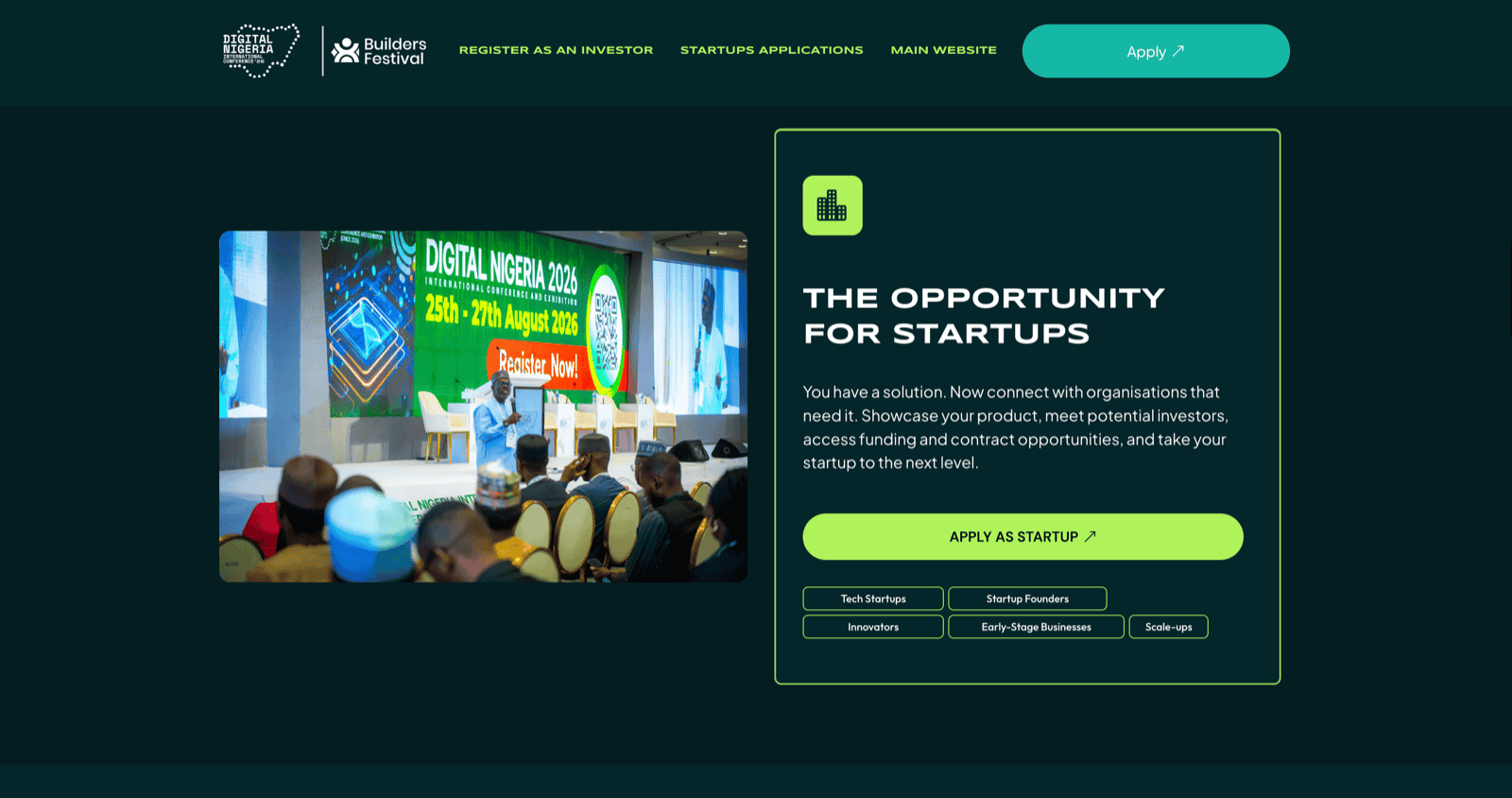
The National Information Technology Development Agency (NITDA) supports the growth of Nigeria's technology ecosystem through digital innovation, entrepreneurship, and technology development initiatives.
One opportunity for tech founders is Tech Revolution Africa's Builders Festival, which connects startups with real challenges identified by government agencies and corporate organisations.
The initiative promotes access to a funding and contract pipeline, including venture capital, angel investment, and government innovation support. It also provides opportunities for startups to showcase their products, connect with potential customers, and explore pilot contracts.
For technology businesses, this can be an opportunity to secure commercial partnerships and funding, although participation does not guarantee a cash grant.
What you should know:
- Funding type: Funding and contract opportunities, rather than a guaranteed grant.
- Target audience: Technology startups, founders, and builders.
- Additional benefits: Direct market access, masterclasses, and institutional connections.
How to apply: Visit the Tech Revolution Africa website to explore the current Builders Festival opportunity and its application requirements.
6. Nigeria Youth Investment Agency (NiYA)
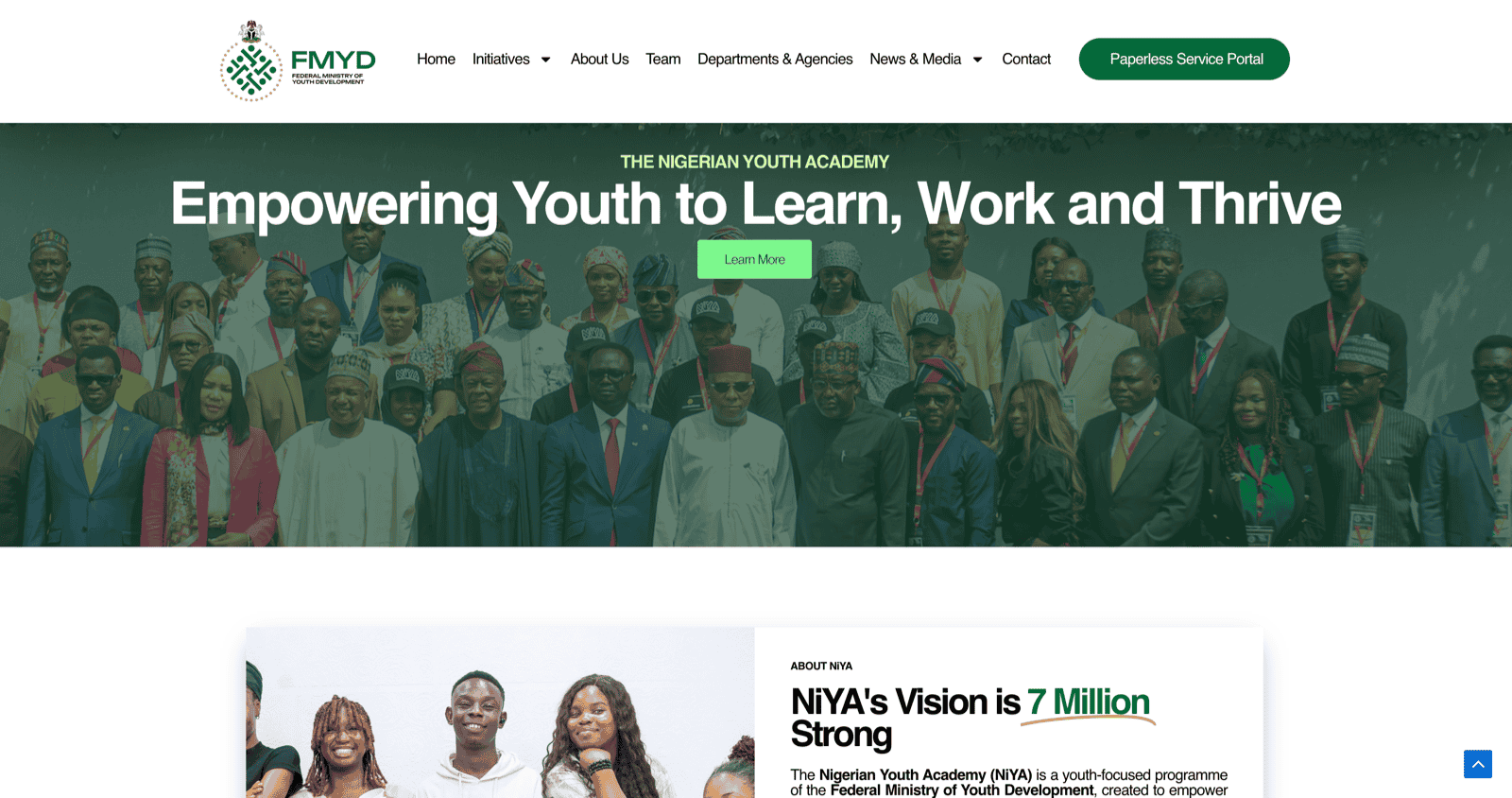
The Nigeria Youth Investment Agency (NiYA) is associated with youth-focused entrepreneurship and investment initiatives under the Federal Ministry of Youth Development.
These initiatives are designed to support young Nigerians with the resources, skills, and opportunities needed to establish and grow viable businesses.
Depending on the specific initiative, support may include business financing, entrepreneurship training, mentorship, and other forms of enterprise development.
It's worth noting that not every NiYA opportunity is a non-repayable grant. Some initiatives may offer loans or other forms of financial support, so applicants should carefully review the terms.
What you should know:
- Funding type: Varies by initiative and may include grants or repayable financing.
- Target audience: Young Nigerian entrepreneurs, subject to programme-specific age and business requirements.
- Additional benefits: Business training, mentorship, and entrepreneurship support.
How to apply: Visit the Federal Ministry of Youth Development's NiYA page for official programme announcements and eligibility details.
7. Orange Corners Nigeria
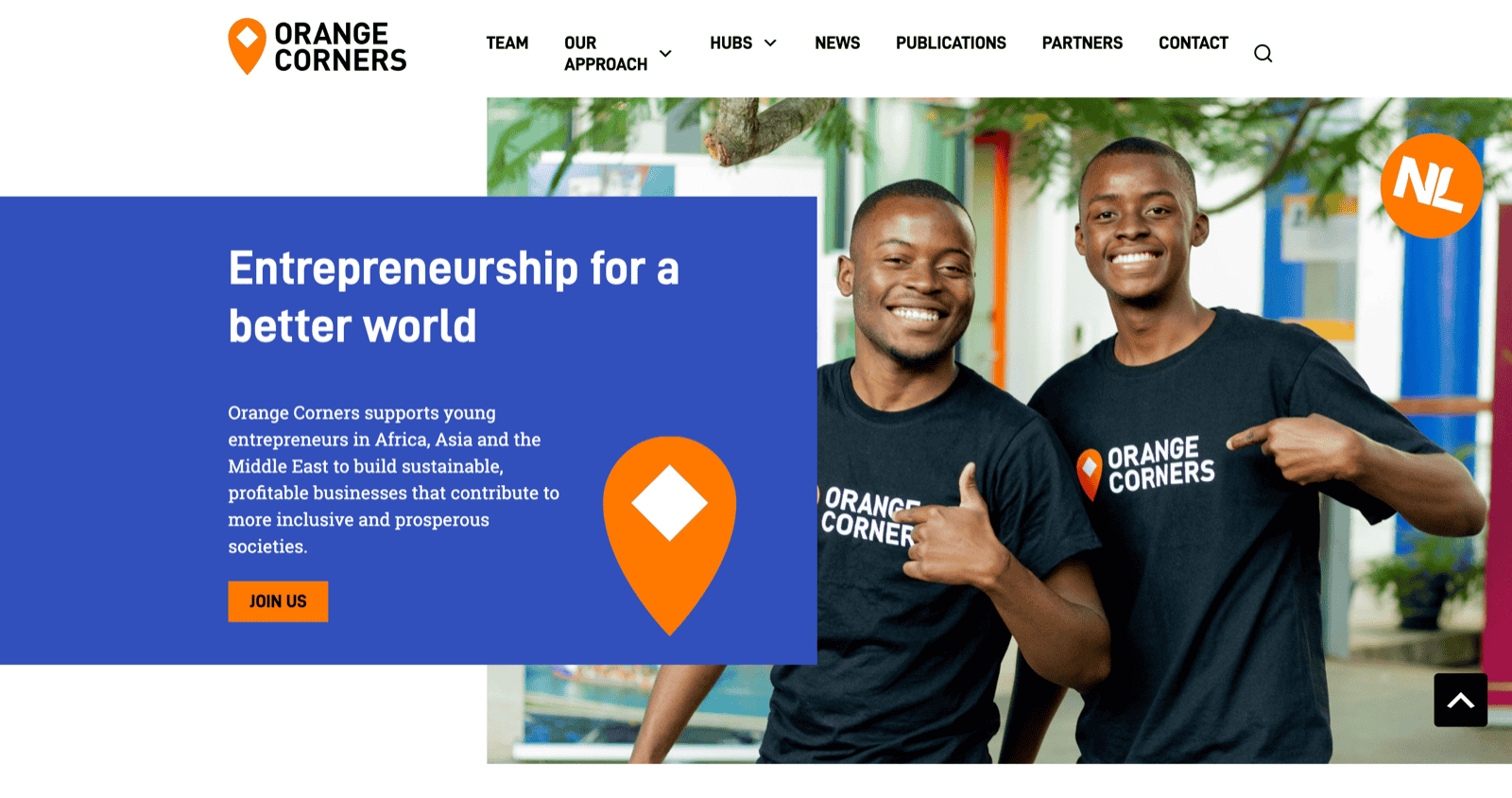
Orange Corners is an entrepreneurship initiative established by the Kingdom of the Netherlands to support young entrepreneurs in emerging markets, including Nigeria.
The programme helps early-stage entrepreneurs develop their business ideas, validate their business models, and build sustainable enterprises.
Through its incubation programmes, participants can access business training, mentorship, networking opportunities, and connections to potential funding.
Some Orange Corners initiatives have included access to the Orange Corners Innovation Fund (OCIF), which supports qualifying entrepreneurs with financing. However, the type and terms of funding depend on the particular programme and funding track.
What you should know:
- Funding type: Financing opportunities through selected funding tracks; terms vary.
- Target audience: Young entrepreneurs building innovative businesses.
- Additional benefits: Incubation, mentorship, business development, and access to networks.
How to apply: Visit the Orange Corners website to find current Nigeria programmes and application details.
8. Bank of Industry (BOI) Intervention Fund Programmes
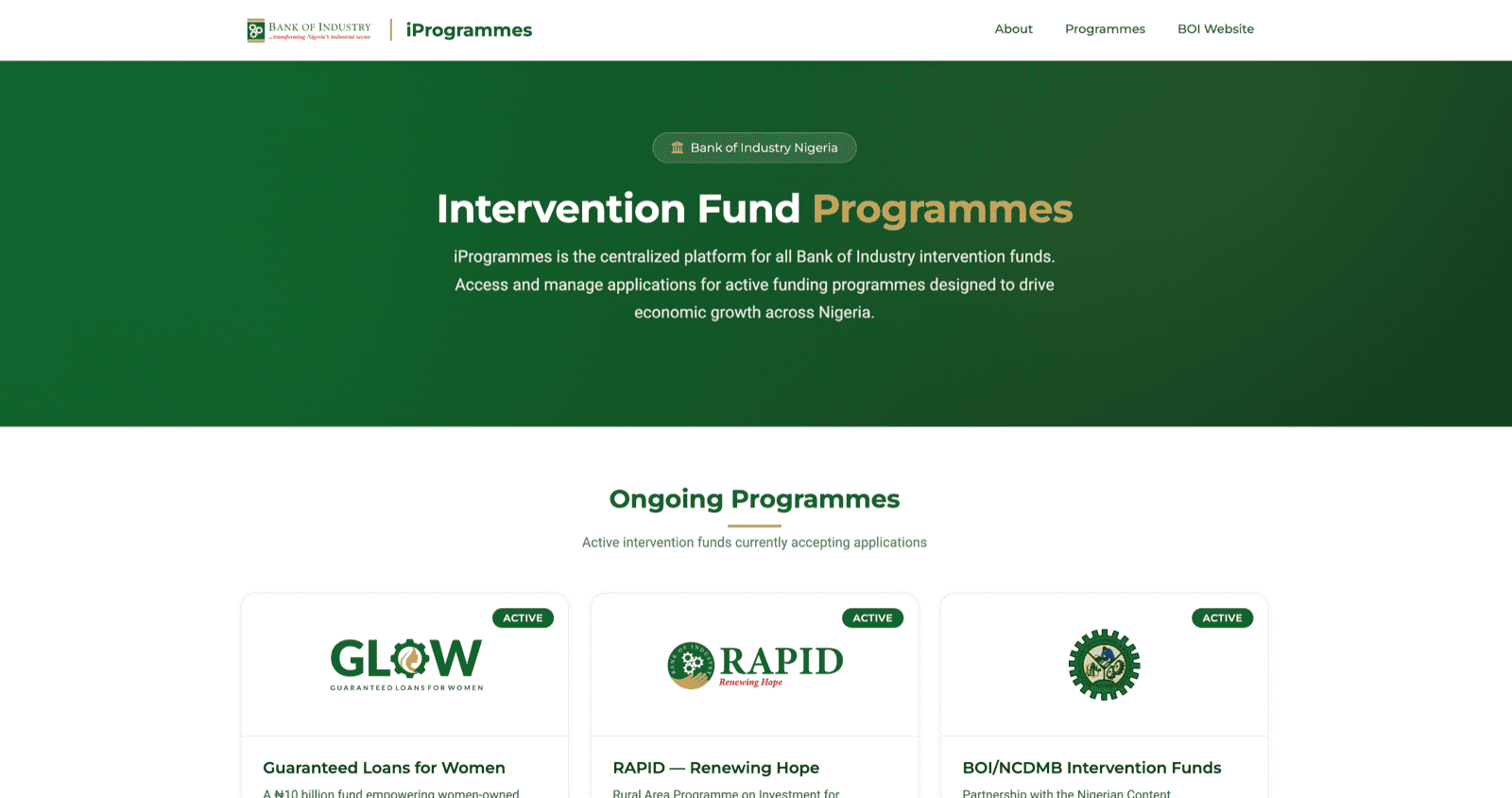
The Bank of Industry (BOI) is a Nigerian development finance institution that provides financial and advisory support to businesses across different sectors.
Its intervention fund programmes are designed to improve access to capital for businesses, including MSMEs, women-owned businesses, youth entrepreneurs, and businesses in specific industries.
Through its iProgrammes platform, BOI provides access to different funding initiatives, including the Guaranteed Loans for Women (GLOW), the Rural Area Programme on Investment for Development (RAPID), and other targeted financing schemes.
What you should know:
- Funding type: Primarily loans and other financing facilities, not universally non-repayable grants.
- Target audience: Eligible MSMEs, women-led businesses, rural enterprises, and other qualifying businesses.
- Additional benefits: Business advisory and capacity-building support, depending on the programme.
BOI is worth exploring if your business needs capital to expand, purchase equipment, or increase production. However, make sure you understand the repayment terms before applying.
How to apply: Visit the BOI iProgrammes portal to explore current intervention funds and their requirements.
9. The Student Venture Capital Program (S-VCG)
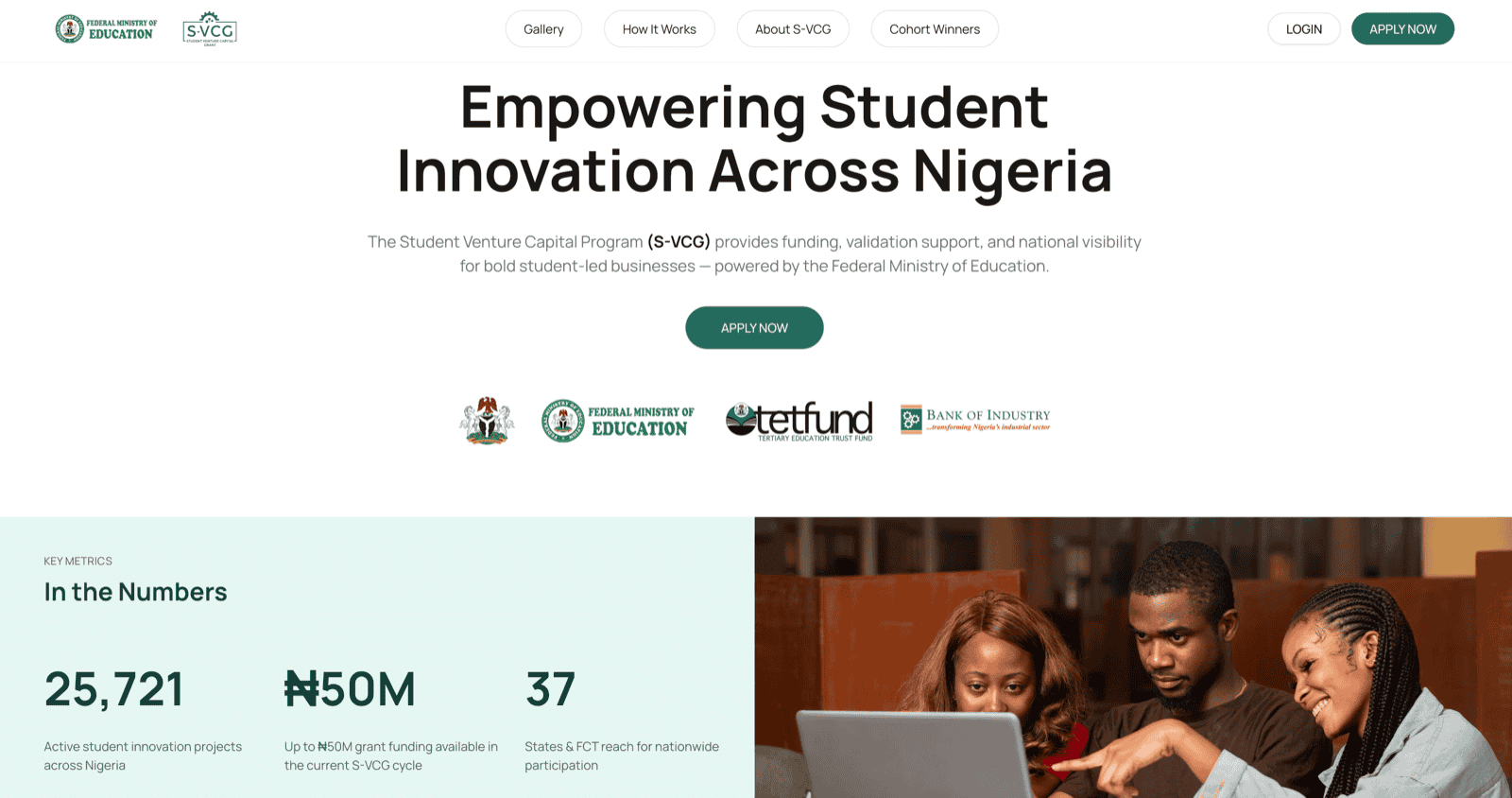
The Student Venture Capital Program (S-VCG) is an initiative by the Federal Ministry of Education designed to empower student-led innovation and entrepreneurship across tertiary institutions in Nigeria.
The program provides funding, validation support, and national visibility to help students transition their business ideas and research into scalable, commercial ventures. S-VCG focuses primarily on ventures in STEMM fields—Science, Technology, Engineering, Mathematics, and Medical Sciences—and awards milestone-based seed funding through transparent evaluation stages.
Additionally, all applicants who submit an eligible project gain access to educational resources, mentorship, and inclusion in the national Innovation Repository for visibility among peers, partners, and prospective investors.
What you should know:
- Funding type: Equity-free seed grants (up to ₦50M in seed investment depending on the cycle).
- Target audience: Student founders and teams in Nigerian tertiary institutions.
- Additional benefits: Structured business validation, mentorship, institutional visibility, and access to developer/learning tools.
How to apply: Visit the official S-VCG Portal to review submission guidelines, register with your student credentials, and submit your project proposal.
10. Africa's Business Heroes (ABH) Grant Competition
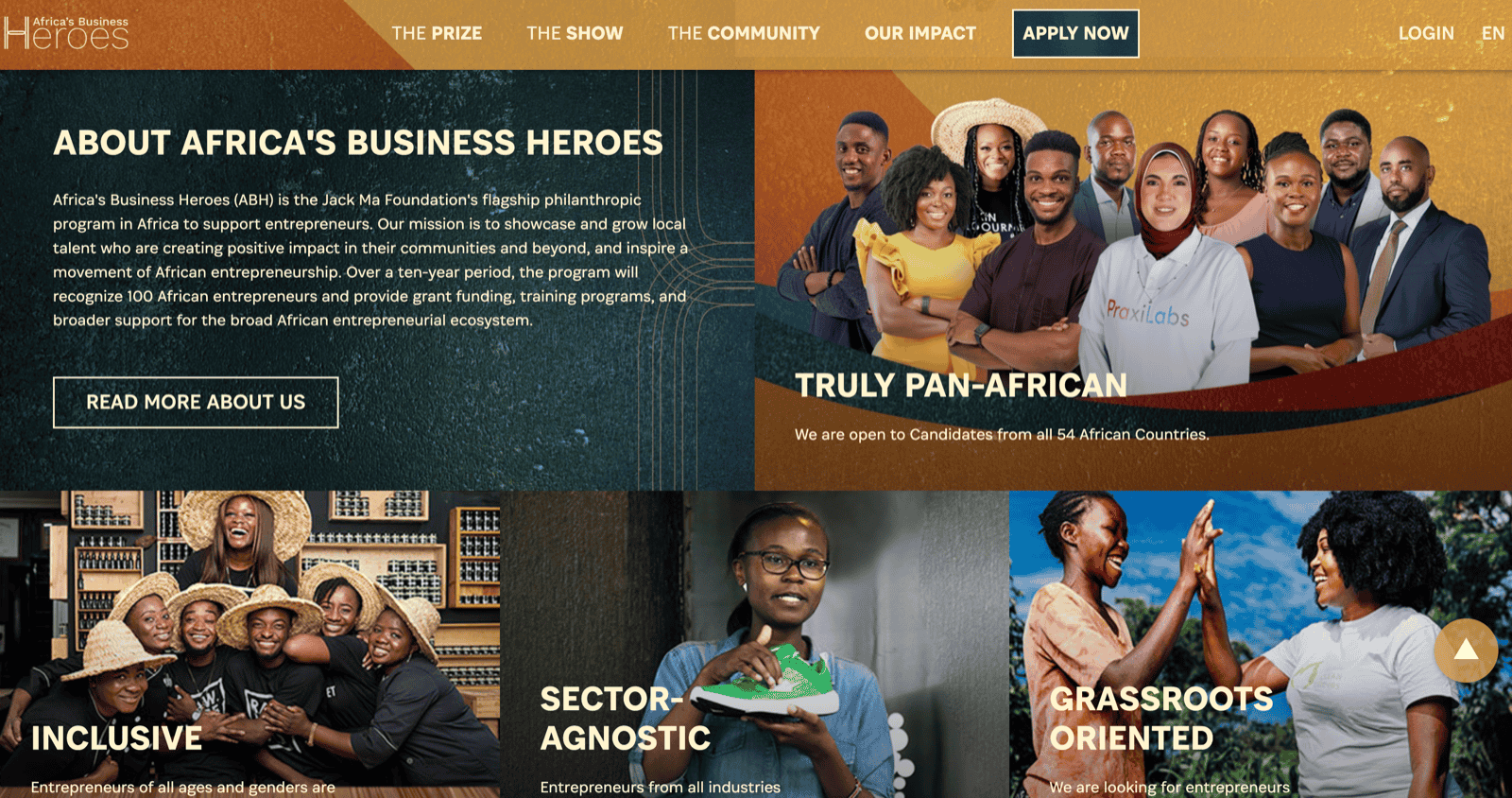
Africa's Business Heroes (ABH) is a pan-African entrepreneurship initiative established by the Jack Ma Foundation to support entrepreneurs building businesses that create positive social and economic impact.
The competition provides grant funding, mentorship, training, and networking opportunities to selected entrepreneurs across Africa. Additionally, programme is sector-agnostic, meaning entrepreneurs from all industries are eligible to apply.
Unlike programmes designed exclusively for early-stage startups, ABH targets entrepreneurs who have already established their businesses and can demonstrate commercial viability, growth potential, and impact.
For the 2026 competition, the top 10 finalists will share a US$1.5 million grant pool. This makes ABH a notable opportunity for established Nigerian businesses looking to scale their operations.
What you should know:
- Funding type: Non-dilutive grant funding.
- Funding pool: US$1.5 million shared among the 2026 top 10 finalists.
- Target audience: African entrepreneurs with established, post-idea-stage businesses.
- Eligibility: The competition requires at least three years of business operations.
- Additional benefits: Mentorship, training, and networking opportunities.
How to apply: Visit the Africa's Business Heroes website to review the eligibility requirements and future application windows.
11. Grooming Endowment Trust (GET) Grant Programs
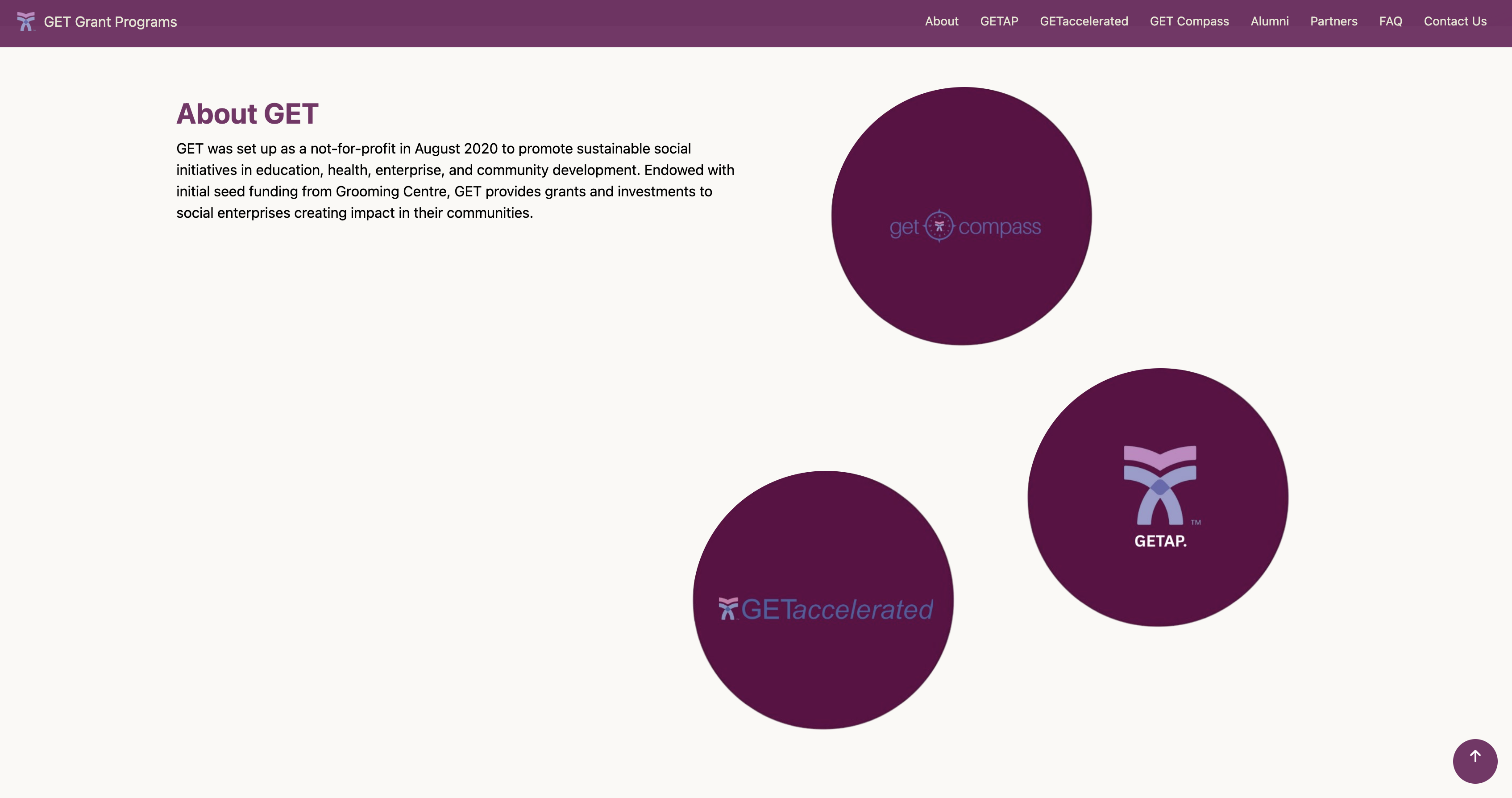
Grooming Endowment Trust (GET) is a non-profit organization established to drive sustainable social impact, economic empowerment, and community development across Nigeria.
Financially backed by seed funding from Grooming Centre, GET provides grants, equity-free seed funding, capacity building, and mentorship to early-stage businesses, social enterprises, and community leaders.
GET operates three primary grant and acceleration tracks:
- GETaccelerated: A flagship startup accelerator for pre-seed and seed-stage tech and tech-enabled ventures. Selected startups participate in a multi-week program and pitch for equity-free funding (with past cohorts receiving over ₦150 million in total grants), alongside 1-on-1 expert mentorship and investor access.
- GET Compass: A targeted grant program offering up to ₦2,000,000 in equity-free capital to early-stage small businesses (under three years old). Selected business owners also undergo a 2-week practical business management workshop in Lagos to scale operations.
- GETAP (Grooming Endowment Teachers Appreciation Program): A social impact initiative rewarding exceptional teachers in low-income and underfunded communities with ₦200,000 grants and material support.
What you should know:
- Funding type: Equity-free grants (up to ₦2 million via GET Compass and larger seed grant allocations via GETaccelerated).
- Target audience: CAC-registered Nigerian startups, early-stage MSMEs (0–3 years old), and social impact innovators.
- Additional benefits: Physical bootcamp and virtual acceleration, 1-on-1 expert mentorship, pitch opportunities at Demo Day, and investor networking.
How to apply: Visit the Grooming Endowment Trust website to track open call-for-applications for upcoming GETaccelerated and GET Compass cohorts.
How to Improve Your Chances of Getting a Business Grant in Nigeria
Finding a funding opportunity is only the first step. Many programmes receive applications from thousands of entrepreneurs, so it's important to prepare your business before applying.
Here are a few practical steps to take:
1. Get your business documents ready
One of the most common requirements for grant and funding applications is your business registration documents. Keep your CAC registration documents, business bank account details, identification, and other relevant records up to date. You don't want to start running helter-skelter when an opportunity comes up, only to realise that an important document is missing, outdated, or difficult to obtain.
2. Keep accurate financial records
Maintaining clear financial records help you explain how your business operates and demonstrate how additional funding could support its growth. Bukki is a simple, yet powerful tool that can help you automate your bookkeeping, track income and expenses, and understand your financial performance in one place.
3. Be specific about how you will use the funds
Instead of simply asking for capital to grow your business, explain what the money will pay for. This could include equipment, inventory, hiring, product development, or marketing.
4. Prepare a compelling business pitch
Clearly explain the problem your business solves, who your customers are, how you make money, and what makes your solution valuable. If you have customers or revenue, include evidence of your traction.
As a business owner or founder, you should always have a pitch deck ready so you can take advantage of funding opportunities when they arise. You can use free tools like Canva templates to generate your own slide decks.
Tip: Avoid relying on AI to create a generic pitch deck. Reviewers may recognise generic or poorly personalised content, which can make your application less compelling.
5. Apply through official channels
Always verify funding opportunities through their official websites or other official channels. Be cautious of individuals who promise guaranteed grants in exchange for unofficial processing fees or sensitive personal information.
In most cases, applications for legitimate funding programmes are free of charge. Stay alert and don't fall for scams.